Sunday, 5 February 2012

A SYKES' MONKEY EATING A SNAKE SKIN

by Helle Goldman

In January 2003, while we were in Zanzibar to camera-trap carnivores in Jozani-Chwaka Bay National Park, my husband Jon Winther-Hansen observed a Zanzibar Sykes’ monkey (Cercopithecus mitis albogularis, a.k.a. Blue monkey or White-throated guenon) eating a sloughed-off snake skin. Partly hidden by the lush foliage of the Indian almond tree (Terminalia catappa) in which it was sitting, the monkey completely consumed its prize in about five minutes. This took place near the Jozani Visitor Centre.

Inhabiting forested parts of east, central and southern Africa, Sykes’ monkeys are food generalists, eating leaves, fruits, seeds, flowers and invertebrates and occasionally preying on vertebrates (Rudran 1978; Butyinski 1982); conspecific infants have also been observed being killed and eaten (Fairgreave 1995). The Zanzibar Sykes' monkey is the subspecies found on Unguja island and on the mainland opposite the Zanzibar archipelago.

We don't know what kind of skin the monkey's meal once belonged to. More than 20 species of snake have been recorded on Unguja (Pakenham 1983: 5; Spawls et al. 2002: passim), but stills from our video clip, some of which are reproduced here, do not permit certain identification of the translucent skin.

While the literature contains a few reports of nonhuman primates dispatching and even consuming snakes (see references in Headland & Greene 2011), we are not aware of reports of Sykes’ monkeys or other primates eating the sloughs snakes leave behind when they shed. We would welcome further information on this point.

References

Butynski, T. M. 1982. Blue monkey (Cercopithecus mitis stuhlmanni) predation on galagos. Primates 23, 563-566.

Fairgrieve, C. 1995. Infanticide and infant eating in the Blue monkey (Cercopithecus mitis stuhlmanni) in the Budongo Forest Reserve, Uganda. Folia Primatologica 64, 69-72.

Headland, T. N. & H. W. Greene 2011. Hunter-gatherers and other primates as prey, predators, and competitors of snakes. Proceedings of the National Academy of Sciences 108, E1470-E1474.

Pakenham, R. H. W. 1983. The reptiles and amphibians of Zanzibar and Pemba islands (with a note on the freshwater fishes). Journal of the East Africa Natural History Society and National Museum 177: 1-40.

Rudran, R. 1978. Socioecology of the Blue monkeys (Cercopithecus mitis stuhlmanni) of the Kibale Forest, Uganda. Smithsonian Contributions to Zoology 249.

Spawls S., K. Howell, R. Drewes & J. Ashe 2002. A Field Guide to the Reptiles of East Africa: Kenya, Tanzania, Uganda, Rwanda and Burundi. London & San Diego: Academic Press.


Monday, 23 January 2012

A PILOT WHALE IN PONGWE

Posing on the Pongwe whale
Just over a week ago (on Sunday 15th January) I went to stay at Pongwe on the east coast of Zanzibar (Unguja island) for the second time in three months. The tide wasn't in until the late afternoon, and not long after I'd had a quick swim -- or rather a float in the shallows -- I was told that there was a dolphin in the water just along from the beach bar that I'd repaired to. I grabbed my camera and walked down to the beach where a number of villagers had already gathered. The consensus of opinion was that the dead animal being drawn towards the shore was a small whale; when it had first been spotted in the bay local fishermen thought that it was a floating log. I began taking photographs of it from a distance as a group of youths posed with it for the cameras on their mobile phones. When it was close to the shore a number of children waded into to take a closer look, and they were only momentarily repelled when it was cut open and the stench of its guts filled the air (putting the pong into Pongwe, as one friend has suggested). A young man on the beach told me that its blubber would be used to caulk their boats. As the light faded so did the usefulness of my relatively simple camera, and I asked a Russian tourist if I could later have copies of his superior shots, including close-ups of the whale's dismemberment.

Spectators on the beach at Pongwe
The next day there was nothing of the whale left on the beach. Its identification as a small whale (nyangumi mdogo) was confirmed by hotel staff: it definitely wasn't a dolphin (pomboo), but was more like a nyamrani. The only examples of this name I can find define it as a kind of shark, in one case the much-feared Tiger Shark, Galeocerdo cuvier. My Unguja dialect-speaking better half recognises nyamrani as a colloquial term used to describe an unmarried man, leaving it open whether the analogy being made is with a shark or a small (and by implication immature) whale. The creature that we actually saw in the bay at Pongwe was most likely a Short-finned Pilot Whale, Globicephala macrorhynchus, a pan-tropical cetacean that is usually seen travelling in pods. It's a member of the family Delphinidae, the oceanic dolphins, and in that respect it's initial description as a dolphin wasn't that far out.

Whale vertebra from Matemwe at Santa Maria Coral Park
Pakenham's checklist of The Mammals of Zanzibar and Pemba Islands (1984) includes an old black and white photograph (facing page 60) of a mass stranding in Zanzibar harbour; and although "Pax" himself seems to have been unsure of their identification, these look quite like the Pongwe specimen. On the beach I was told that the last beaching of a small whale in Pongwe bay had occurred two or three years ago. The hotel bar is decorated with vertebrae from a much larger whale, stranded at Matemwe in 1994 or thereabouts, and purchased much later by the hotel's owner. In the natural history section of the Zanzibar Museum there's a photograph of a 61 foot whale washed up at Chake Chake in Pemba in 1932. Following a similar stranding at Mkumbuu in the early 1990s fishermen came from far and wide to take home pieces of the large whale, which in this case was described as a chongowe -- another name that is variously identified in the literature (this incident is described in Popobawa narratives, cf. Walsh 2009: 27).

Watching the whale's disembowelling
The Pongwe whale wasn't considered edible because it had died perhaps two or three days before it was found. But, as already noted, it would provide oil for caulking boats, known as sifa, a term apparently deriving from the Portuguese term for similar preparations (cifa, cf. Johnson 1939: 429, where the Swahili product is described as shark oil). Our barman, a man from Uroa, also suggested that its blubber might be used medicinally, whale fat being a favourite in local concoctions used to treat pumu, asthma. On Pemba my research assistant Jamila wrote that people thought that whale fat was a good medicine for mishipa, blood vessels and other internal organs and the pain associated with them; for example just two or three drops might be stirred into porridge and given to someone as a cure for the pain caused by a hernia. I should have taken the time to find out exactly what had happened to the blubber and other parts of the Pongwe whale, if they hadn't just been left to wash back out to sea. But my thoughts were with other research, and I didn't pursue these questions any further. I did, however, get the much better photos and video clips that my Russian friend, Yaroslav Alexandrov, had taken, and some of his images are shown at the end of this post.

Acknowledgements
Many thanks to Helle Goldman and through her, Kit Kovacs, at the Norwegian Polar Institute for help with the identification of the Pongwe whale; to Juma Ali Salehe and others at Santa Maria Coral Park for their good company and local knowledge; and to Yaroslav Alexandrov for his generosity in sharing his excellent photographs and video clips, which I've edited and downsized for posting on this blog.

References

Johnson, Frederick (ed.) 1939. A Standard Swahili-English Dictionary. London: Oxford University Press.

Pakenham, R. H. W. 1984. The Mammals of Zanzibar and Pemba Islands. Harpenden: privately printed.

Richmond, Matthew D. (ed.) 2002. A Field Guide to the Seashores of Eastern Africa and the Western Indian Ocean Islands (2nd edition). Sida/SAREC -- UDSM.

Walsh, Martin 2009. The politicisation of Popobawa: changing explanations of a collective panic in Zanzibar. Journal of Humanities (Dodoma) 1 (1): 23-33.

The pilot whale in Pongwe bay (photo by Yarolsav Alexandrov)
Men and women inspecting the dead pilot whale (photo by Yaroslav Alexandrov)
Cutting the whale open (photo by Yarolsav Alexandrov)
The whale's intestines spilling into the sea (photo by Yaroslav Alexandrov)

Monday, 26 December 2011

FROM GREEN MONKEY DISEASE TO FRUIT BAT VIRUSES

Kenyans breathed a collective sigh of relief on Friday when it was announced that a 29 year-old woman who had bled to death in Kenyatta National Hospital the morning before was not the victim of an Ebola-like virus, as had initially been feared (for the Nation's version of these events, click here). As readers of Richard Preston's bio-thriller The Hot Zone (1994) were informed in full technicolour detail, Ebola and its congener, Marburg virus, don't take many prisoners. Typically more than half of the people who display symptoms of these highly infectious diseases die; in some outbreaks close to 90% of those infected have succumbed. The symptoms of these deadly viruses can be terrifying: some victims may suffer severe hemorrhaging, bleeding from all of their bodily orifices. And they don't always go quietly: some Ebola victims die an even more horrible death, thrashing about in a uncontrollable fit as they smear and splatter blood everywhere. Thanks in part to exaggerated accounts like Preston's, Ebola and Marburg elicit widespread fear, and panic when they are thought to be anywhere near.*

The recent scare reminded me of earlier Ebola panics. In 1980, during my first few weeks in Tanzania, overland travellers staying at the Moravian Youth Hostel in Mbeya came bearing hair-raising tales of what was then dubbed 'Green Monkey Disease', a killer infection that had led to periodic closures of the roads through the southern Sudan. Although I didn't know it then, this was a variety of Ebola, the virus named after its discovery in 1976 near the headwaters of the Ebola River in Zaire (now the Democratic Republic of the Congo, DRC). The first recorded Sudanese outbreak occurred in the same year, and killed more than 150 people. It was followed by another in 1979, and it was this recurrence (which resulted in 22 fatalities) that had affected the travel plans of my fellow hostellers. Otherwise I didn't really become aware of Ebola by name until the mid-1990s, when there were further cases in Zaire. The Kikwit outbreak in 1995, which killed 250 people, was widely reported in the press and was said to have led to tourist cancellations throughout the region, especially in countries and territories whose names also began with the letter 'Z' (like Zambia and Zimbabwe). One of these was Zanzibar, where I was living and working at the time.

The Ebola virus
(Dr. Frederick Murphy)
 The Ebola-Zaire strain is the most virulent of this family of thread-like viruses. The first of the filoviruses to be described was Marburg virus, named after an outbreak in a factory in the West German city of Marburg in 1967. The Hot Zone opens with a dramatic reconstruction of the first case in Kenya, which took place in 1980 when a Frenchman who worked at the Nzoia Sugar Factory died in Nairobi Hospital. Before dying he vomited blood over the Ugandan doctor who was treating him, and Dr. Shem Musoke was infected in turn. The presence of Marburg was detected in samples of Musoke's blood taken by a colleague, cardiologist Dr. David Silverstein, and after being close to death his life was saved. Silverstein is perhaps best known as former President Moi's personal physician, and as one of the leaders of the Jewish community in Kenya. Coincidentally I was treated by him some years later for a phantom blood clot, and it was Shem Musoke who did me the favour of diagnosing it as imaginary. But that's a story for another day.

Silverstein was also involved in the treatment and diagnosis of Kenya's second Marburg victim, a Danish boy who died in Nairobi Hospital in 1987. These have been the only confirmed incidents in Kenya to date, and it turns out that both of of the victims had visited Kitum Cave on the slopes of Mount Elgon not long before they fell ill. The Hot Zone ends with an account of author Richard Preston's foray into the cave wearing a protective suit, wondering which, if any, of its animal inhabitants or visitors might host the virus. For a time monkeys were implicated, not least because they were the immediate source of outbreaks of both Marburg and Ebola in laboratories on different continents. The first Marburg infections came from Vervets (aka Green monkeys, Chlorocebus pygerythrus, syn. Cercopithecus aethiops) imported from Uganda, and one of Preston's informants believed that there had been an earlier undocumented outbreak of Marburg among monkeys and people on the northern side of Mount Elgon. However, monkeys are evidently not the primary host of either Marburg or Ebola: like people, too many of them die too quickly during an outbreak for the viruses to spread more widely. Not that this has stopped Preston and other journalists from imagining a doomsday scenario involving international air travel...

Richard Preston preparing to enter Kitum Cave (author's website)
It turns out that the association with caves (and in some cases mines) is much more significant for an understanding of the natural reservoirs of Marburg and Ebola. In recent years a number of studies have detected the presence of these filoviruses in otherwise healthy cave-dwelling bats, suggesting that they are their main natural hosts. I've posted links to some of the relevant papers (most of them open access) in the references  below. Bats carrying Marburg and Ebola have been identified in Gabon (which has yet to suffer a recorded outbreak), DRC, and Kenya, and it seems likely that they will also be discovered in other African countries. The bats involved include a growing list of insectivorous species as well as the Egyptian fruit bat (Rousettus aegyptiacus), which has tested positive for both Marburg and Ebola. This is one of Africa's most common bats, known for roosting in large colonies in caves, unlike many other fruit bats. The good news is that health education can now be targeted at cave sites in national parks and other underground locations that receive large numbers of visitors. The bad news is that outbreaks of Marburg and Ebola are likely to occur in hitherto unsuspected places across the continent. At least last week's scare proved to be a false alarm.

Note
* For more sober information about Ebola and Marburg, including details of all the confirmed outbreaks, readers should refer to the Centers for Disease Control and Prevention website and the pages for Ebola Hemorrhagic Fever and Marburg Hemorrhagic Fever respectively.

References

Kuzmin, Ivan et al. 2010. Marburg virus in fruit bat, Kenya. Emerging Infectious Diseases 16 (2): 352-354.

Leroy, Eric M. et al. 2005. Fruit bats as reservoirs of Ebola virus. Nature 438: 575-576.

Pourrut, Xavier et al. 2005. The natural history of Ebola virus in Africa. Microbes and Infection 7: 1005-1014.

Pourrut, Xavier et al. 2009. Large serological survey showing cocirculation of Ebola and Marburg viruses in Gabonese bat populations, and a high seroprevalence of both viruses in Rousettus egyptiacus. BMC Infectious Diseases 9: 159.

Preston, Richard 1994. The Hot Zone. New York: Random House. [the link given here is to a complete typescript of the main text]

Towner, Jonathan S. et al. 2007. Marburg virus infection detected in a common African bat. PLoS ONE 2 (8): e764.

Sunday, 4 December 2011

FLYING FROM DAR TO ZANZIBAR

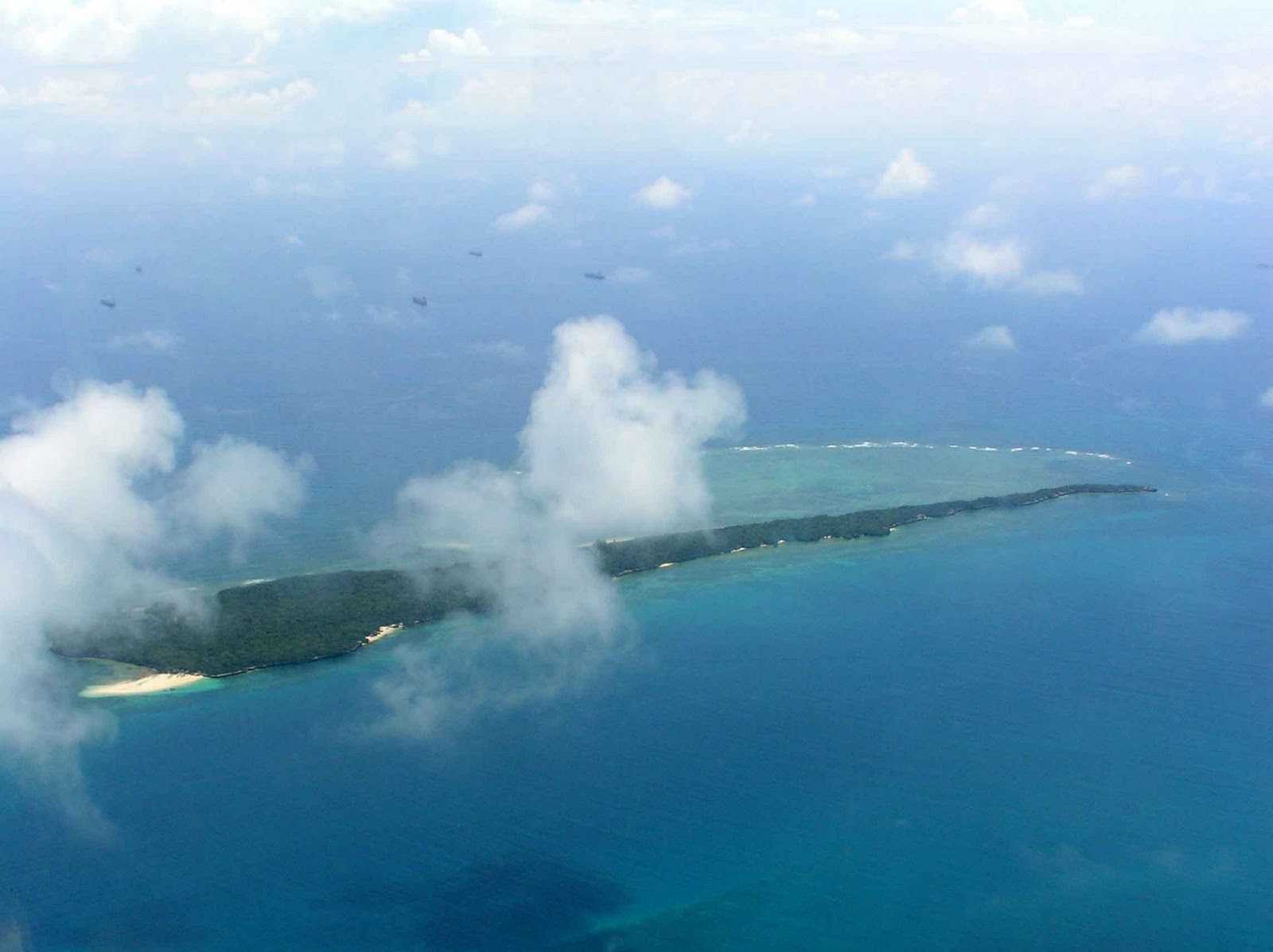
I've lost count of the number of times I've flown between Dar es Salaam and Zanzibar. But until last month I'd never tried to take photographs of the journey. In the mid-90s, when I flew regularly on light aircraft, I didn't have a good enough camera; and in recent years I've usually been a passenger on larger aeroplanes with misty windowpanes. So in early November I was thrilled to find myself sitting alone on the back seat of a small plane with access to windows on both sides, through which I took most of the photos shown below. It was a sunny morning with a few patches of cloud, and stayed that way until we began the approach to the airport in Zanzibar, where it was pouring down with rain. By this time, though, my camera's memory chip was full, and so I didn't get any shots of the end of the flight.

Coastal Aviation flight to Zanzibar on the morning of 6 November 2011: the view from the back seat

The domestic terminal of Julius K. Nyerere International Airport in Dar es Salaam

The main terminal of Julius K. Nyerere International Airport, Dar es Salaam

Suburbs north of the airport in Dar es Salaam

Suburbs of Dar es Salaam

Dar es Salaam: looking towards the city centre and Indian Ocean

Ubungo and the road out of Dar

The University of Dar es Salaam

Msasani Bay looking towards the peninsula

The Msasani Peninsula

Bongoyo Island

Bongoyo Island and clouds

Mbudya Island

Kunduchi

Kunduchi Beach Hotel and Resort

The mainland coast between Mbweni and Bagamoyo

The mainland coast opposite Zanzibar

Reef and rainbow 1

Reef and rainbow - 2

Reef and rainbow - 3

Reef and rainbow - 4

Reef and rainbow - 5

Reef and rainbow - 6

Looking towards Pungume Island and Unguja

Kwale Island and Menai Bay

Reef and the Fumba Peninsula

Reef near the Fumba Peninsula - 1

Reef near the Fumba Peninsula - 2

Reef near the Fumba Peninsula - 3

Looking towards Chumbe Island