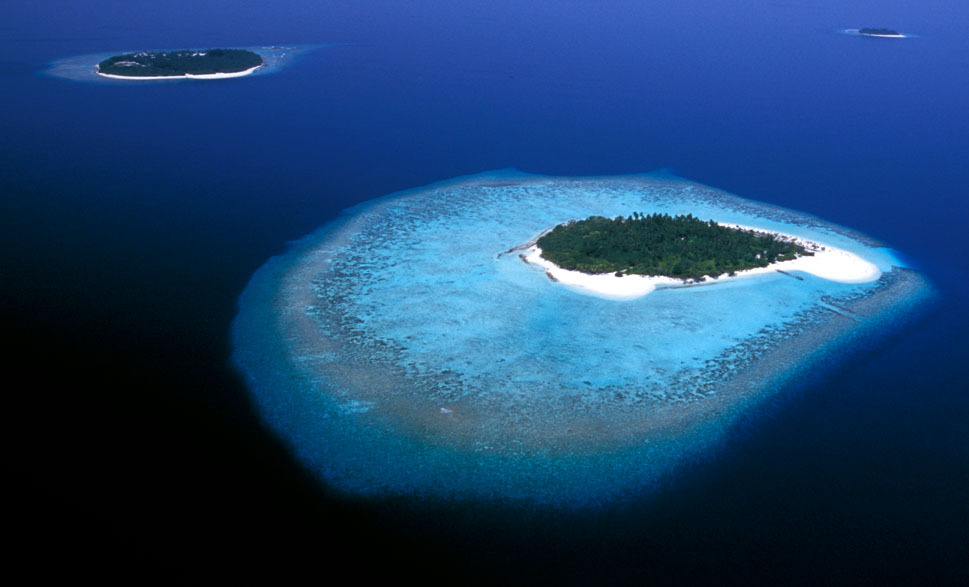
One of the enduring mysteries of Indian Ocean history is how and why
speakers of a
Bornean language came to settle on the island of
Madagascar. The Dutch explorer
Frederik de Houtman (1603) drew attention to the similarities between
Malay and
Malagasy more than two centuries before
Wilhelm von Humboldt (1836-39) proposed the name
Malayo-Polynesian for the language family to which they both belong, now classified as a branch of the
Austronesian language phylum. Subsequent scholars speculated on the nature of ancient contacts between Indonesia and East Africa, and a various theories were advanced about the settlement of Madagascar. The puzzle deepened when Otto Christian Dahl (1951) concluded that Malagasy is most closely related to
Ma'anyan and the
East Barito
languages of southeastern
Borneo, a hypothesis that is now widely accepted. How did the Bornean ancestors of the Malagasy, members of a group that has no apparent maritime tradition, reach Madagascar? Were they brought on the vessels of Malay (
Srivijayan) or
Bajau ('sea nomad') traders and/or raiders visiting the coast of East Africa, as some have suggested? How did they pick up the smattering of Bantu vocabulary and linguistic habits that are evident in Malagasy? Was Madagascar already settled by Africans before their arrival, as Dahl argued?
 |
| Festschrift for Professor Claude Allibert |
These and other questions about the nature of Austronesian voyages and settlement in the western Indian Ocean remain unanswered, though our knowledge is advancing all the time. Last weekend I received my copy of
Civilisations des mondes insulaires (2010), a collection of papers written in honour of Professor Claude Allibert, best known for his archaeological and historical research in the Comoros and Madagascar. I was pleased to find that a number of the thirty-plus contributions to this weighty volume have a direct bearing on the Austronesian problem. These include a review of the cultivated plants introduced by the first Austronesian migrants to Madagascar by Philippe Beaujard, and a discussion of the genetic evidence for the settlement of the Comoros and Madagascar by Axel Ducourneau. The first paper I read, though, was 'The Maldives connection: pre-modern Malay world shipping across the Indian Ocean' by Pierre-Yves Manguin, not just because it was in English, but because of its relevance to my own contribution about a particular set of historical traditions on the East African coast.
These traditions, about a foreign people called Diba (
Wadiba), Debuli (
Wadebuli), and variants thereof, have been recorded in scattered locations between the Lamu archipelago in the north and Kilwa (and thereabouts) in the south. The Diba
et al. are sometimes described as unwelcome slave-raiders and invaders, and in other sources as the bearers of new cultural practices, technologies (maritime, architectural), and agricultural crops. There is no consensus on who the Diba and Debuli were: commentators have identified them as visitors of Arabian, Persian, Indian,
Laccadive or
Maldive origin. Harold Ingrams (1931: 47-48) considered but rejected the possibility, raised by Archdeacon Dale (1920: 13), that they might have been Malay. Some traditions as well as one version of the ethnonym (Dubuki) imply a connection with Madagascar, while the name Diba (ultimately from
Sanskrit dvipa, 'island') could refer to inhabitants of any of the islands in the Indian Ocean, not just the Laccadives and Maldives. These and other features of the traditions suggest that the Diba
et al. might have been Austronesians, though the evidence for this is equivocal. It is clear that the recorded traditions conflate different historical events, and in my paper I concluded as follows:
Unless we read the Diba/Debuli traditions very selectively, we cannot interpret them as evidence for interaction with a single group of visitors to the East African coast. And if they contain a deep memory of Austronesian contacts and trade, then this has evidently been overlain by other memories of interaction with outsiders, Persians, Arabs, Indian, and Portuguese included. (2010: 469).
Nevertheless, I remain attracted by a selective reading of the Diba traditions. Sacleux (1939: 538) defined Swahili
Mdiba as the name for an indigenous inhabitant of the Maldives, and Lydekker (1919: 90-91) was led to believe that the
Wadiba of
Bajuni tradition came from the Laccadive islands. In his paper, Pierre-Yves Manguin reviews the documentary evidence for historical connections between insular Southeast Asia and these continguous archipelagos, which are often treated as one in the early literature. The evidence is impressive, and includes the suggestion that the Maldivian (
Dhivehi) name for the
Chagos archipelago, Folovahi (and variants), is derived from Malay
Pulo Weh, an island off the northwestern tip of
Sumatra which is on the old sailing route to the Maldives. Manguin argues that in addition to the direct and well-known route between the Maldives and the coast of Somalia, Austronesian voyagers may also have used
Diego Garcia and the Chagos islands as a stepping stone to reach Madagascar and the East African coast. In any event these different journeys involve passing through the Maldives.
Other kinds of evidence, from maritime technology (Manguin 2000) and comparative linguistics (Tom Hoogervorst, personal communication, April 2010), support the hypothesis that the Maldives were an important staging point for Austronesian exploration and expeditions into the western Indian Ocean. We know from
Buzurg ibn Shahriyar's
Book of the Marvels of India that Indonesians were raiding and trading on Pemba and the mainland coast (down to Sofala) in the 10th century (Mauny 1965: 7-8), and they may well have been doing so for some time. Two centuries later
Al-Idrisi reported that merchants from Sumatra were still trading with the East African coast, where "they understand one another's language" (Mauny 1965: 14). These facts fit well with some of the Diba and Debuli traditions, including one Pemban historian's repeated reference to the people of "Diba and Jawa" together, as though they were a single entity (Ingrams 1931: 125). Jawa, of course, is the island of
Java (Yawadvipa in the Sanskrit epic
Ramayana). Can it be that his garbled history and others like it are showing us a glimpse of events that happened so long ago? I'm tempted to say yes. The Maldives connection certainly deserves a closer look.
References
Beaujard, Philippe 2010.
Les plantes cultivées apportées par les premiers migrants austronésiens à Madagascar. In
Radimilahy and Rajaonarimanana (2010). 357-385.
Dale, Godfrey 1920.
The Peoples of Zanzibar: Their Customs and Religious Beliefs. Westminster: Universities' Mission to Central Africa.
Dahl, Otto Christian 1951.
Malgache et Maanjan: une comparaison linguistique. Oslo: Egede Institutett.
Ducourneau, Alex 2010.
Approche phylogéographique du peuplement de l'océan Indien occidental. In
Radimilahy and Rajaonarimanana (2010). 855-871.
de Houtman, Frederik 1603.
Spraeck ende woord-boeck, inde Maleysche ende Madagaskarsche Talen met vele Arabische ende Turcse woorden. Amsterdam.
von Humboldt, Wilhelm 1836-39.
Über die Kawi-Sprache auf der Insel Java (3 vols.). Berlin.
Ingrams, Harold 1931.
Zanzibar, its History and its People. London: H. F. & G. Witherby.
Lydekker, C. J. W. 1919. The "mtepe" dhau of the Bajun islands.
Man 19 (46): 88-92.
Manguin, Pierre-Yves 2000. Les techniques de construction navale aux Maldives originaires d'Asie du Sud-Est.
Techniques & Culture 35-36: 21-47.
Manguin, Pierre-Yves 2010. The Maldives connection. In
Radimilahy and Rajaonarimanana (2010). 261-284.
Mauny, Raymond 1965. The Wakwak and the Indonesian invasion in East Africa in 945 A.D.
Studia 15: 7-16.
Radimilahy, Chantal and Narivelo Rajaonarimanana (eds.) 2010.
Civilisations
des mondes insulaires (Madagascar, îles du canal de Mozambique,
Mascareignes, Polynésie, Guyanes): Mélanges en l'honneur du Professeur
Claude Allibert. Paris: Karthala.
Sacleux, Charles 1939.
Dictionnaire Swahili-Français. Paris: Institut d'Ethnologie.
Walsh, Martin 2010. Deep memories or symbolic statements? The Diba,
Debuli and related traditions of the East African coast. In
Radimilahy and Rajaonarimanana (2010). 453-476.